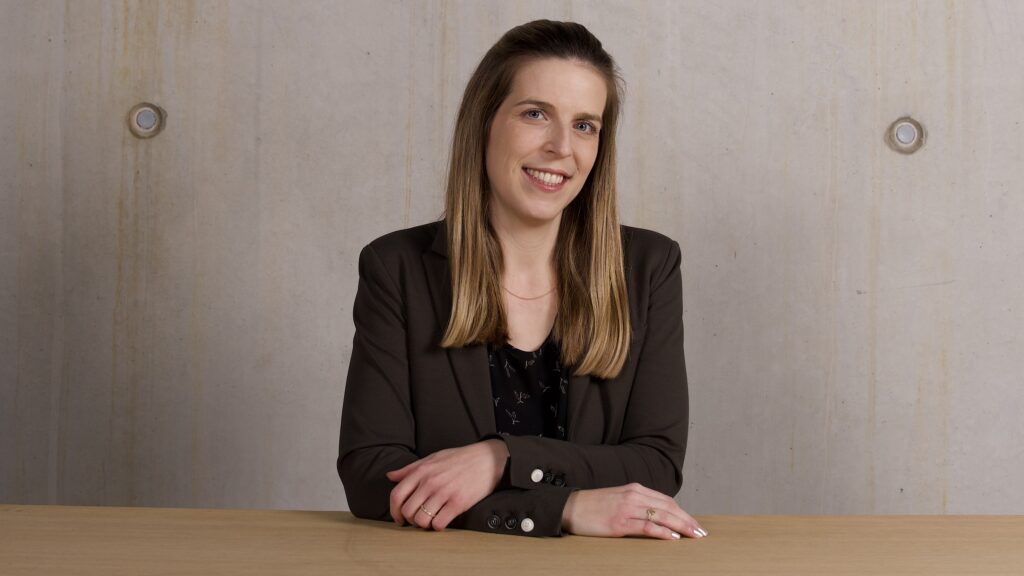
Interview with Tom Winter, CEO BERNEXPO
Photo: Fabian Hofmann
Trade fairs and events:
Key to success in the digital world
In an increasingly digital world, many companies are asking themselves what role trade fairs and events still play in the marketing mix. Are personal encounters and face-to-face contacts still irreplaceable, or are alternative formats becoming increasingly important? Today's interview gets to the bottom of these questions and sheds light on how the trade fair and event industry has changed in recent years.
A conversation with Tom Winter, CEO of BERNEXPO, about trends shaping the industry and how companies can get the most out of their trade fair and event participation.
How have trade fairs and events changed in recent years, particularly due to the influence of digitalization?
Generally speaking, you can say that the influence of digital technologies has of course already ushered in a radical change. But the coronavirus pandemic has clearly shown us the limits of digitalization.
In what way?
We have realized how irreplaceable personal interaction on site is and that no one wants to follow an event purely digitally for a day. On the other hand, customer contact, marketing and event support are increasingly taking place digitally.
Even at traditional trade fairs such as the BEA or a caravan salon?
Yes, here too: without digital marketing, our events would certainly be less well attended. Mail and Meta play the main role at our public fairs, while marketing via LinkedIn is more successful in the business sector.
In your opinion, what characterizes a successful trade fair?
The real stars of a trade fair are the people and the products of the respective industry. Ultimately, it is precisely the satisfaction of these people that defines the success of a trade fair.
How lovingly and elaborately a trade fair and events in general are conceived, marketed and staged depends very much on the respective industry and its market situation. The magic of a trade fair ultimately results from an incredible number of conversations and the often spontaneous exchange of ideas between people. Everything that promotes this exchange contributes to its success.
What is particularly important in the production?
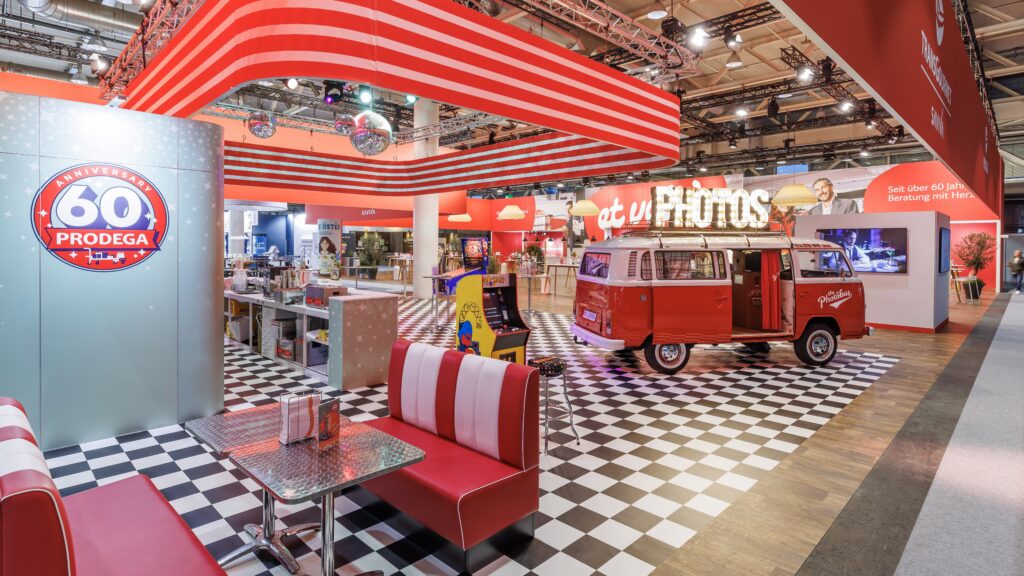
Every year, our exhibitors provide very impressive examples of implementation. A carefully designed room, an elaborately designed stand impress and enrich events. At the same time, I am a friend of simple and straightforward concepts. Not everything that is technically possible makes sense. Sometimes it's good to stick to traditions, even if you could make them much more futuristic technically. It's a bit like your parents' home: you come home and find your way around blindfolded.
Don't people always have higher expectations?
Absolutely, and that's a good thing. People are used to certain standards and our requirements are constantly growing. The overall experience is becoming increasingly important. The actual conception of an event, marketing, invitation management, interior design, staging, event technology, catering, digital, transparent support. Anyone who opts for the maximum option for each of these topics must be able to afford it. Coordination with each individual event and its target group is therefore crucial.
Speaking of target groups: how can you get young people interested in a trade fair?
In general, young people have the same needs as older trade fair visitors. However, at our educational events and concerts, we have noticed that there is less demand for active sales and advice on products and services. Young people today obtain information via other channels and proactively ask questions themselves when they want to know something. They like to discover, love to create and develop themselves. New digital channels such as Twitch and similar social media channels, where young people have their own experiences, are having a massive impact on consumer behavior. At our trade fairs, we always actively accompany our young visitors and help them to make decisions and solve problems, but we still have a lot to learn ourselves in order to pick them up and support them in the best possible way at all times.
What do you think the future holds for trade fairs?
The trend towards the festivalization of trade fairs continues. The event character will therefore continue to increase in the future. The demand for successful visualizations paired with surprising experiences to create intense moments will continue to increase. Here, too, we are still gathering experience in order to optimize and drive forward the trade fair business. We are always testing new formats, giving a lot of freedom and open framework conditions to make a trade fair commercially successful. We offer our open trade fair ecosystem with all its design options to our exhibitors at all times.
So the exhibitors themselves should also be open to new ideas?
That's right. The change must also come from the exhibitors themselves, who decide how digital and commercial they want it to be. Thanks to its diversity, our area is predestined to draw on the full potential. People still enjoy meeting up and appreciate the personal interaction at a trade fair. Together with everyone involved, we create new approaches and are constantly developing new formats or putting old ones in a new, fresh position. With over 300 different events per year and a variety of theme worlds on our site, we have a large portfolio that gives us the opportunity to constantly evolve.
What are your hopes for the new festival hall in this context?
The new festival hall ideally complements the current space available on our site. It is not just an additional hall, but a multifunctional building with flexible space for countless needs. We are ideally positioned in terms of interior design, hospitality, event technology, logistics and location. In the corporate environment as well as in the new outdoor area, with the water feature, the group of trees or the pergola around the new festival hall, we are creating new spaces for experiences. We are also creating a new dimension in the cultural sector for the Bern location that has never been offered before. We are very much looking forward to working with our customers and guests to continuously develop the offering and the site.